
Starting & Growing a Turf Cleaning Business
Licensing, insurance, equipment kit, lead generation, route density, hiring, and adding turf cleaning to an existing service business.
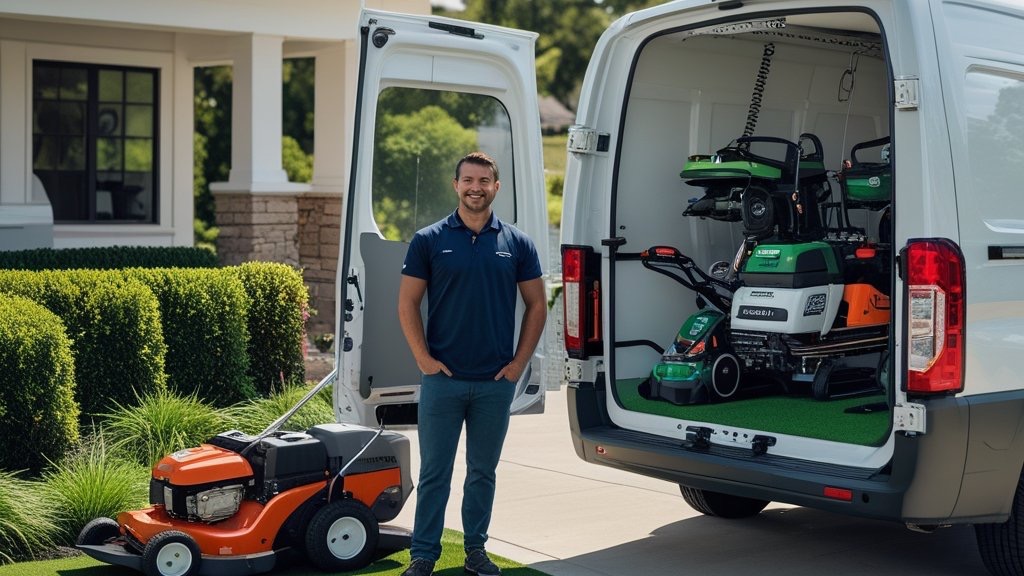
A Young Niche With Real Margins
Artificial turf cleaning is one of the youngest, fastest-growing niches in the residential service trades, with demand accelerating sharply after 2020 as synthetic lawns and pet turf spread through suburban and high-cost markets.
For an existing pressure-washing, lawn, pool, or pet-waste-removal operator, it is rarely a from-scratch startup. It is a high-margin add-on layered onto a truck, a route, and a customer list you already own.
The incremental investment is turf-safe chemistry and a power broom, and the payoff is a service most competitors do poorly.
The core value proposition is narrow and lucrative: eliminate pet urine odor and restore matted, compacted infill. Sold as a one-off deep clean it pays; sold as a recurring quarterly or semi-annual maintenance plan it compounds.
This chapter lays out the real numbers you can stand behind: per-square-foot pricing, per-visit minimums, subscription economics, startup-equipment tiers, the insurance and licensing reality, and the per-job chemical math that determines whether each visit is profitable.
Keep one framing front and center: the financial engine is recurring revenue and route density, not raw price per job.
A solo operator who clusters tight routes and sells maintenance plans beats one chasing scattered one-off deep cleans at a higher headline rate. Get the odor chemistry right, price with a floor, and build the route, and the margins follow.
Why Turf Cleaning Is the Ideal Add-On, Not a Cold Startup
If you are already in the home-service business, you are closer to a turf-cleaning revenue line than you think. The barriers most people imagine simply are not there.
- Demand for artificial turf cleaning accelerated post-2020 and now sits as a natural high-margin add-on for pressure-washing, lawn, pool, and pet-waste-removal companies that already own the truck, the route, and the customer list.
- The incremental cost to add the service is modest: turf-safe chemistry and a power broom, layered onto equipment most of these businesses already run.
- Equipment barriers are genuinely low. A basic setup overlaps heavily with pressure-washing gear; a rough startup range runs from about $1,000 for a basic kit to several thousand dollars and up for a professional rig (treat this as an estimate from the pressure-washing overlap, not a turf-specific sourced figure).
- Real differentiation and margin do not come from owning more machines. They come from recurring contracts, route density, and credible odor results.
- Net margins for well-run cleaning service businesses run roughly 15 to 30% in owner earnings (a general cleaning-industry benchmark, not turf-specific); protecting that band is the whole game as you add labor.
If you are starting fresh instead, none of this is out of reach, but you will carry the customer-acquisition cost that an existing operator skips. Either way, your fastest path to a profitable first month is selling to people who already trust you.
For the homeowner-side view of when to call a pro at all, the DIY vs. Pro chapter frames the buying decision your customers are making.
Pro Tip
If you already pressure-wash, you are most of the way there. Sell turf cleaning to your existing list first. Warm customers and zero new acquisition cost are the cheapest revenue you will ever book.
Pricing: Three Ways to Quote, Always With a Floor
Turf cleaning rewards operators who price deliberately and punishes those who guess. There are three pricing levers, and the job in front of you tells you which to pull.
- Anchor your rate card on real published pricing. The Sparkly Turf model runs three tiers: Refresh from $299 (light maintenance), Restore from $399 (the pet and odor tier), and Deep from $699 (urine extraction and full restoration).
- Each tier has a fixed starting price plus a per-square-foot rate that applies only to area over 400 sqft: $0.75/sqft for Refresh and Restore, $0.95/sqft for Deep. A 1,000 sqft Restore is $399 + (600 x $0.75) = $849.
- The tier starting price is your job minimum, and full-detail pet-odor work starts at the Restore tier ($399), rising to the Deep tier ($699) for set-in urine.
- Price three ways and let the job dictate: tier starting price as the floor, per-square-foot to scale large yards over 400 sqft, and subscription plans for recurring revenue.
- The starting price is what keeps small jobs profitable. A 200 sqft yard pays the $299 Refresh floor, not 200 x $0.75 = $150, because drive time and setup do not shrink with the yard.
- These are real rates from a premium, pet-heavy Las Vegas market. Lower-cost or low-pet markets run under this, so treat the structure as the model and adjust the dollar figures to your own market.
- Bid by measuring square footage first, then layer condition modifiers: pet load, infill compaction, calcium and mineral buildup, odor severity, and access. A heavy-pet job sits in the Restore or Deep tier; a light refresh is a Refresh.
Pricing is deep enough to warrant its own playbook. For bid construction, condition modifiers, and margin protection, work through the Pricing & Bidding chapter alongside this one.
Warning
Never quote a small yard on per-square-foot alone. A 200 sqft yard at $0.75/sqft is $150, and that undercuts your own $299 Refresh floor. The tier starting price exists precisely to stop this: jobs at or under 400 sqft pay the floor, not the per-sqft math.
The Recurring-Revenue Engine: Maintenance Plans Over One-Offs
This is the section that separates a busy operator from a profitable one. The headline rate gets attention, but recurring revenue and tight routes are what actually compound into a business.
- Recurring maintenance plans are the financial engine of the business. They stabilize cash flow, lower per-visit acquisition cost, and let you build route density.
- Frame service frequency by pet count, which also matches the plan ladder: no pets about quarterly; 1-2 dogs bi-monthly; 3+ pets or high-traffic monthly to weekly.
- Sell the plan as a fixed discount off each clean by frequency: quarterly 10% off, bi-monthly 20% off, monthly 30% off, weekly 40% off (the Sparkly Turf structure). Most pet owners pay roughly 30 to 50 percent less over a year on a plan than on repeated one-time deep cleans.
- One-off jobs carry high acquisition cost and zero density. The business only compounds on maintenance plans, so position recurring service as the default offer, not the upsell.
- Route density beats raw price. Cluster 2-3 jobs per neighborhood per day; drive time between scattered jobs is the silent margin killer. A tight route of $299 to $699 jobs compounds fast; spread-out jobs can halve effective revenue, so do not treat raw rate as guaranteed daily earnings.
The cadence you are selling is the same routine the homeowner keeps up between your visits. Pointing customers to the routine maintenance chapter reinforces the plan and shows them exactly what they are buying into.
Recommended Product
TurfMist's ready-to-use format makes the recurring plan easy to sell. Homeowners can do a light between-visit top-up themselves, which keeps the turf fresh and keeps your brand in the customer's hands between paid visits.
Understand the Odor Chemistry So You Can Sell It
You cannot charge a premium for a result you cannot explain. The single most marketable fact in this trade is that the smell lives below the surface, and the pro who understands why wins the job.
- Pet urine odor comes from urea (and urochrome) plus uric acid crystals. Urea and urochrome are water-soluble and rinse away; uric acid crystals persist in the infill and feed bacteria that produce the ammonia smell.
- Synthetic turf has no soil microbes to break this down, so effective treatment must reach the infill, not just the blades. Surface-only sprays mask; real fixes treat the infill.
- Two complementary chemistry approaches exist: enzyme cleaners digest uric acid and ammonia compounds at the molecular level (dependent on dwell time, moisture, and temperature), while hydrogen peroxide (typically 3-6%) oxidizes organics and kills odor bacteria on contact, then decomposes to water and oxygen once dry, leaving no residue.
- Hydrogen peroxide at high concentrations (roughly above 12%) can damage turf fibers and fade color; spot-test and use proper dilution before any full application.
- The credible pro pitch is to pair fast oxidation and sanitizing with mechanical extraction and infill agitation (and an enzyme follow-up for severe cases), not to claim a single spray permanently eliminates all odor. On its own, an oxidizer does not dissolve set-in uric-acid crystals bound deep in the infill.
This is the science your premium tier is built on. The pet odor control chapter goes deep on urine chemistry and the enzyme-vs-oxidizer comparison, which is worth mastering so you can answer the questions every pet owner asks.
Did You Know
The smell lives in the infill, not on the blades. This single fact is your entire differentiation pitch against a homeowner with a $1,000 rental washer who only rinses the surface.
Equipment Tiers: Buy for the Jobs You Actually Have
The fastest way to torch your startup capital is buying a truck-mount before you have the jobs to justify it. Match your kit to your actual workload and let revenue pull you up the tiers.
- Grooming machines (power brooms, groomers) and sanitizing equipment (extractors, sprayers) solve different problems and are complementary, not substitutes. A residential pet-odor startup does not need a $6,000 groomer.
- Entry kit, assembled for under about $2,000: a battery or electric walk-behind power broom ($395 to $590; the NexGen Turf Sweeper 40V is $395), a backpack sprayer, a shop-vac turf attachment ($22 to $28, lifts debris without disturbing infill), and a leaf blower.
- Mid tier adds a gas Honda GX35-powered walk-behind brush broom (about $985, the typical step between battery brooms and ride-on groomers), a portable heated extractor, and an electrostatic sprayer.
- Pro tier centers on a truck-mount hot-water extractor. These heat water to roughly 210 to 230F and pull contaminants down through the infill to the base, which is what actually removes embedded urine and odor. A truck-mount setup takes roughly 15 to 20 minutes per job and requires a dedicated van.
- Truck-mount pricing: used slide-in units run roughly $3,000 to $8,000; new units start around $14,000 entry-level and climb to $30,000 to $50,000 and up for high-end systems. A full pet-odor rig centered on a truck-mount runs about $8,000 to $25,000 and up.
- Portable extractors are limited by water lift (suction), not just airflow; typical portables move about 80 to 150 CFM and many lack the suction to pull contaminants from deep in the infill. They rinse the surface; embedded urine below the fiber line stays put and the odor returns within days, especially in heat.
- The application layer is the lowest-cost, highest-margin spend: a commercial 4-gallon backpack sprayer (Solo 425, Chapin ProSeries) runs $80 to $200, and a handheld electrostatic sprayer runs $300 to $900 (charges droplets so they wrap around fibers for even coverage and less waste).
- Match the sprayer to the chemistry. Hydrogen-peroxide and acidic deodorizers degrade cheap seals; use chemical-resistant elastomer seals (Viton/FKM is acceptable up to roughly 60% concentration; EPDM is fine at the dilute concentrations typical of turf products) and rinse equipment after every use.
For spec-level depth on power brooms, extractors, and sprayers, the Equipment & Machines chapter covers what each machine does and when buying beats renting.
Pro Tip
Rent or buy used on the truck-mount until job volume justifies it, but buy outright the cheap high-use items (backpack sprayer, leaf blower, battery broom). Rental fees on those exceed purchase cost within a few jobs.
Licensing, Insurance, and Staying Legal
This is where vibe-based business advice gets dangerous, so here is the honest version: requirements vary by state and municipality, and you must verify your own locally. The points below are the general federal baseline plus a few documented state examples, not universal law.
- Most operators do NOT need a pesticide applicator license. The EPA Ornamental and Turf Pest Control certification (40 CFR 171.101) is required only for the use or supervision of restricted-use pesticides.
- General-use deodorizers and EPA-registered antimicrobial sanitizers do not trigger federal RUP certification. Still, verify state-specific rules before applying any EPA-registered antimicrobial, because some states regulate antimicrobial application more tightly than the federal floor.
- Carry general liability insurance regardless. You are applying chemicals near homes, pets, and kids; GL is non-negotiable and is the baseline for non-RUP turf cleaning.
- Where states regulate pesticide or antimicrobial application, minimum coverage applies. Pennsylvania requires $100,000 bodily injury plus $100,000 property damage per occurrence, $200,000 total (7 Pa. Code 128.34). A Tennessee pest control charter requires $250,000 per incident and $500,000 aggregate. These are state-specific examples; check your own state's figures.
- Improper high-pressure washing (excessive PSI, hot water, narrow jets) frays fibers and displaces infill, and is commonly excluded from or can void installation and manufacturer warranties. Use turf-safe technique: lower pressure, wide fan tips, and a power broom for agitation. Sell that expertise as the reason to hire a pro.
Warning
Treating turf like a driveway can void the customer's manufacturer warranty. That is a liability claim waiting to happen. Turf-safe technique is both a selling point and a risk control.
Per-Job Chemical Economics With TurfMist
Odor elimination is the number one service customers ask for, so a reliable, pet-safe deodorizer is a core consumable from day one, not an afterthought.
Buying it in bulk (the 4-pack and 12-pack, or a 55-gallon drum at scale) is how you turn the highest-demand service into the highest-margin line on the job.
- TurfMist is a ready-to-use, hydrogen-peroxide-based odor eliminator for artificial turf, made in Las Vegas, Nevada. It oxidizes organic odor sources (uric-acid salts, ammonia compounds, bacteria) on contact and breaks down into water and oxygen, leaving no residue and no fragrance masking.
- It is ready-to-use with no mixing. The manufacturer instructs holding the sprayer 6 to 8 inches from the surface and spraying evenly until lightly dampened, with no rinsing required. For pros, it can be applied via battery backpack sprayer or fogger to cover large installs; no pro-dilution ratio is published, so apply it ready-to-use.
- Manufacturer-stated coverage is 400 to 600 sq ft per gallon at a light-maintenance rate; heavily contaminated areas use more per square foot.
- Pricing as of June 2026 (confirm at purchase): 1-gallon $47.99; 12-pack $447.99, which works out to about $37.33 per gallon. Package sizes run 1-gallon, 4-pack, 12-pack, and a 55-gallon drum, with a Pro Login and bulk/wholesale positioning for installers, kennels, and commercial pet facilities.
- Cost-per-job math: a typical light-maintenance residential visit (300 to 500 sq ft, about one gallon) costs roughly $37 per gallon at 12-pack pricing up to $47.99 for a single gallon, so chemical cost stays well under $50 per visit. The 55-gallon drum drops it further for high-volume routes. Heavily soiled yards may require more than one gallon.
- Re-entry is pet-safe once dry, about 15 minutes; full air-dry typically 2 to 6 hours depending on heat and humidity. Keep pets off while wet, as wet hydrogen peroxide can irritate skin, eyes, and paws.
- Position it honestly: TurfMist sanitizes and deodorizes on contact and works immediately in heat and sun (where condition-sensitive enzymes can underperform), but it stops working once dry and does not by itself fully digest uric acid bound deep in the infill. Pair it with mechanical extraction and infill agitation on heavy contamination, and add an enzyme follow-up for severe cases.
- Treat the 99.9% odor, bacteria, and contaminant figures as the manufacturer's marketing claims. No EPA registration number is published, so do not present TurfMist as a certified disinfectant or sanitizer in a regulatory sense.
- Never mix any peroxide turf product with chlorine bleach. Bleach can damage turf and, combined with the ammonia in pet urine, can release toxic chloramine gas. Store peroxide products cool and dark.
Recommended Product
At about $37/gallon in the 12-pack and lower at drum scale, TurfMist lets even a sub-$2,000 entry kit (battery broom + backpack sprayer + TurfMist) credibly service routine residential pet turf, with chemical cost under $50 per visit on a typical yard.
The On-Site Job Sequence
Order matters. Applying deodorizer over debris or skipping extraction on a heavy job is how the smell comes back and the callback eats your margin. Run every job in this sequence.
For the full extraction and infill-treatment workflow you are charging the premium tier for, the deep cleaning chapter details the on-site method step by step.
Remove solids and rinse pooled urine
Pick up all solid waste and rinse pooled or fresh urine first. Water-soluble urea and urochrome flush away at this stage, so you are not wasting chemistry on contamination a hose can remove.
Lift and de-compact the fibers
Run the power broom to lift matted, compacted blades and de-compact the infill. This restores the look and opens the infill so treatment can reach the layer where odor lives. Grooming does nothing for odor on its own, but it sets up everything that follows.
Extract embedded urine on heavy contamination
On heavy pet jobs, use a hot-water extractor to pull embedded urine and contaminants down through the infill to the base. This is the step a homeowner with a rental washer cannot replicate, and it is what makes the odor result actually last.
Apply TurfMist ready-to-use
Apply TurfMist ready-to-use, holding the sprayer 6 to 8 inches from the surface and spraying to a light, even dampening so the oxidizer reaches both fibers and infill rather than sitting on debris.
No mixing, no rinsing. For large installs, a battery backpack sprayer or fogger covers ground fast.
Set re-entry and the next visit
Tell the customer pets can return once dry, about 15 minutes (full air-dry is 2 to 6 hours). Before you leave, set the next visit by pet count and offer a between-visit TurfMist top-up they can do themselves to keep the turf fresh and your brand in their hands.
Launch Playbook: From First Customer to a Full Route
If you are building this from a standing start or bolting it onto an existing route, these eight steps sequence the launch so you spend on equipment and labor only after demand justifies it.
Validate demand on your existing list
If you already run a pressure-washing, lawn, pool, or pet-waste business, offer turf cleaning to current customers first. This is zero-acquisition-cost revenue and tells you whether your market has pet-turf density before you spend on equipment.
Assemble a sub-$2,000 entry kit
Buy a battery or electric power broom ($395 to $590), a chemical-resistant 4-gallon backpack sprayer (Solo/Chapin, $80 to $200) with Viton or EPDM seals, a shop-vac turf attachment ($22 to $28), and a leaf blower.
Add TurfMist as the deodorizing layer. Rent or buy a used truck-mount extractor only once odor jobs justify it.
Lock in insurance and verify licensing
Bind general liability coverage before your first paid job. Confirm your state's rules on antimicrobial and pesticide application; standard deodorizers are general-use and usually need no applicator license, but where chemical application is regulated, meet the minimum coverage (for example, $100k/$100k per occurrence in Pennsylvania).
Build a three-way pricing sheet with a floor
Set three tiers with a starting-price floor (Refresh $299, Restore $399, Deep $699), a per-square-foot rate that scales only over 400 sqft ($0.75/sqft Refresh and Restore, $0.95/sqft Deep), and a recurring plan that discounts each clean by frequency (quarterly 10%, bi-monthly 20%, monthly 30%, weekly 40%).
The starting price protects you on small yards where per-sqft math undercuts your drive time.
Quote by measuring, then layer condition modifiers
Measure square footage on site, then adjust up for pet load, infill compaction, calcium and mineral buildup, odor severity, and access. A heavy-pet deep clean earns the top tier; a light refresh sits at the bottom.
Run the job in the correct order
Remove solids and rinse pooled urine, lift and de-compact fibers with the power broom, extract embedded urine on heavy contamination, then apply TurfMist ready-to-use (6 to 8 inches from the surface, light even dampening) so the oxidizer reaches fibers and infill rather than sitting on debris.
Tell the customer pets can return once dry, about 15 minutes.
Convert every clean into a maintenance plan
Before you leave, set the next visit by pet count: yearly for no pets, every six months for 1-2 dogs, quarterly for 3+ or high-traffic. Offer a between-visit TurfMist top-up the homeowner can do themselves to keep the turf fresh and your brand in their hands.
Build route density before adding labor
Cluster 2-3 jobs per neighborhood per day to kill drive time. Use a Google Business Profile with review velocity, door hangers in pet-dense and new-build neighborhoods, and installer referral partnerships.
Hire a technician only once routes reliably fill, and hold a second crew until volume justifies it.
Crew Economics and Scaling the Route
Scaling a cleaning business is mostly about resisting the urge to add overhead too early. The discipline that keeps you in the 15 to 30% owner-earnings band is route design and patient hiring.
- A solo operator maximizes margin. The first hire should be a technician to fill route capacity, not back-office overhead.
- Hold the second crew until route volume reliably fills two crews. Adding labor too early compresses margins below the 15 to 30% owner-earnings band.
- Lead-gen stack for local intent: a Google Business Profile with photos and review velocity is number one; door hangers in pet-dense and new-build turf neighborhoods are cheap and targeted; and partnerships with turf installers generate referrals (they want a maintenance referral so warranties hold and yards keep looking good).
- Profit math must include drive time. The $1,000 to $2,100/day figure assumes tight clustering; spread-out jobs can halve effective revenue, so route design is a margin decision, not just logistics.
- Scale on recurring contracts and density, not headline price. Compounding revenue comes from filling routes with maintenance plans, then adding a technician once those routes are full.
High-value contracts also live beyond residential. Sports fields, putting greens, playgrounds, dog daycares, and rooftops carry their own methods and frequencies; the Commercial & Specialty Turf chapter covers the work that fills out a mature route.
And if you want to see the operator who sets the bar for finished work, Sparkly Turf is the reference point for professional turf cleaning done right.
Pro Tip
Partner with local turf installers before you spend a dollar on ads. They install yards that will need maintenance to keep warranties valid, and they would rather refer you than field odor complaints themselves.
Frequently Asked Questions
Use a real tiered rate card instead of a flat per-sqft number. The Sparkly Turf model runs three tiers, each with a starting price that acts as the job minimum: Refresh from $299 (light maintenance), Restore from $399 (the pet and odor tier), and Deep from $699 (urine extraction and full restoration). The per-square-foot rate, $0.75/sqft for Refresh and Restore, $0.95/sqft for Deep, applies only to area over 400 sqft, so a 1,000 sqft Restore is $399 + (600 x $0.75) = $849. These are real rates from a premium, pet-heavy Las Vegas market; lower-cost or low-pet markets run under this, so adjust the dollar figures to your own market while keeping the tier structure.
A low-capital entry kit, a battery or electric power broom ($395 to $590), a backpack sprayer ($80 to $200), a shop-vac turf attachment ($22 to $28), and a leaf blower, can be assembled for under about $2,000. A full pet-odor rig built around a truck-mount extractor runs about $8,000 to $25,000 and up. As a rough range, expect roughly $1,000 for a basic setup to several thousand dollars and more for a professional rig (an estimate based on the heavy overlap with pressure-washing equipment).
In most states, no. The EPA Ornamental and Turf Pest Control applicator certification is required only for using or supervising restricted-use pesticides. General-use deodorizers and EPA-registered antimicrobial sanitizers do not trigger that federal certification. Always carry general liability insurance regardless, and verify your state's rules before applying any EPA-registered antimicrobial. Some states set minimum coverage where chemical application is regulated, for example Pennsylvania requires $100,000 bodily injury plus $100,000 property damage per occurrence.
One-off jobs carry high acquisition cost and zero route density. Recurring plans stabilize cash flow, lower per-visit acquisition cost, and let you cluster jobs into tight routes. Sell the plan as a fixed discount off each clean by frequency, the Sparkly Turf structure: quarterly 10% off, bi-monthly 20% off, monthly 30% off, weekly 40% off. Frame frequency by pet count: no pets about quarterly, 1-2 dogs bi-monthly, 3+ pets or high-traffic monthly to weekly. Most pet owners pay roughly 30 to 50 percent less over a year on a plan than on repeated one-time deep cleans, and the business only compounds on recurring revenue and route density, so sell the plan as the default offer.
The odor comes from uric acid crystals bound into the infill, not on the blades, so you must reach the infill. A power broom lifts and de-compacts fibers, but it does nothing for odor. For embedded urine, a truck-mount hot-water extractor (heated to about 210 to 230F, pulling contaminants down to the base) is what truly deep-cleans; portable extractors (about 80 to 150 CFM) mostly rinse the surface and the smell returns within days. Finish with a sanitizing deodorizer like TurfMist applied via a backpack or electrostatic sprayer. Grooming and sanitizing are complementary, not substitutes.
TurfMist is ready-to-use hydrogen-peroxide chemistry. As of June 2026 it is $47.99 per gallon, or $447.99 for a 12-pack (about $37.33/gallon); confirm pricing at purchase. Coverage is 400 to 600 sq ft per gallon at a light-maintenance rate, so a typical 300 to 500 sq ft residential yard uses about one gallon, keeping chemical cost under $50 per visit (less at 55-gallon drum scale). Apply ready-to-use, 6 to 8 inches from the surface to a light even dampening, via backpack sprayer or fogger; no mixing and no rinsing. Pets can return once dry, about 15 minutes. Pick up solids and rinse pooled urine first, and pair it with extraction on heavy contamination since the oxidizer does not, by itself, fully digest deeply bound uric acid.
Yes. Excessive PSI, hot water, and narrow jets fray fibers and displace infill, and that damage is commonly excluded from or can void installation and manufacturer warranties. Use turf-safe technique: lower pressure, wide fan tips, and a power broom for agitation rather than aggressive jets. This is also a selling point, the reason a homeowner should hire a trained pro instead of renting a washer that only rinses the surface and risks the warranty.
Well-run cleaning service businesses generally run roughly 15 to 30% in owner earnings (a general cleaning-industry benchmark, not turf-specific). The biggest levers for staying in or above that band are route density (clustering 2-3 jobs per neighborhood per day to kill drive time) and recurring contracts. A solo operator maximizes margin; add a technician only once routes reliably fill, and hold a second crew until volume justifies it, or margins compress.
Liked this chapter? The handbook includes:
Bonus resources that go with what you just read
- Business launch checklist (license, insurance, branding)
- Lead-generation and marketing starter kit
- First-90-days route and revenue planner
Free Turf Cleaning Cheat Sheet
Get a quick-reference cleaning schedule, product list, and seasonal checklist delivered to your inbox.
You're on the list!
Check your inbox for the cheat sheet.
Something went wrong. Please try again.
No spam, ever. Unsubscribe anytime.
Get the Complete Turf Cleaning Handbook
All 8 chapters, bonus checklists, seasonal schedules, and product recommendations in a beautifully designed, downloadable PDF.
Buy the HandbookInstant download. 30-day money-back guarantee.