
Pro Equipment & Machines
Power brooms, groomers, extractors, foggers, and vacuums. What each machine does, what it costs, and when to buy versus rent.
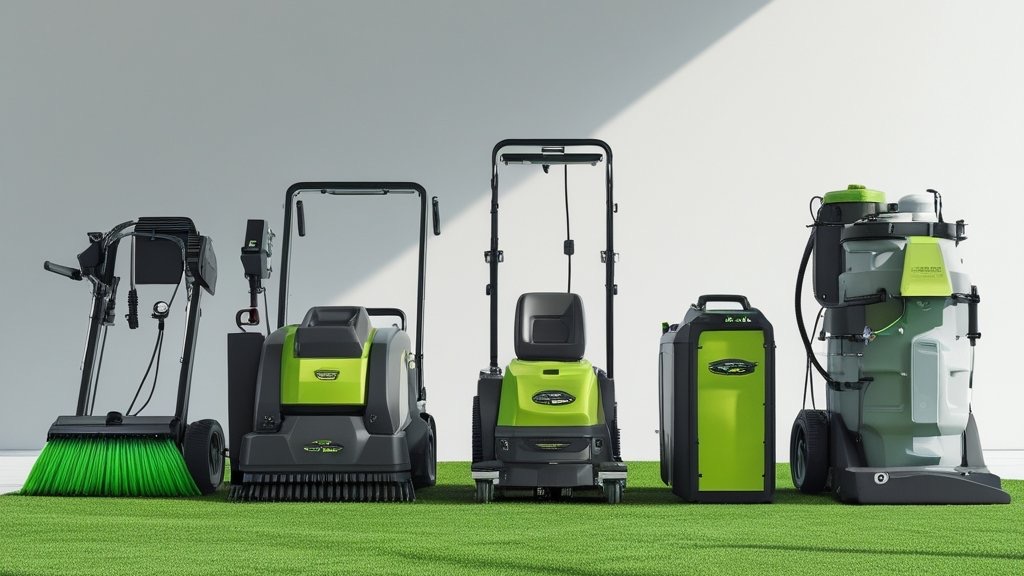
Buy for the Right Job, Not the Loudest Machine
Equipment is where most new turf-cleaning operators either overspend on the wrong machine or undercut their results with a tool that only rinses the surface.
The trap is treating turf cleaning as one job. It is actually two distinct jobs that demand different machines: grooming and debris removal (power brooms, groomers, sweepers, blowers, infill vacuums) and deep sanitizing and deodorizing of pet and bacterial contamination (hot-water extractors plus sanitizer application via sprayers and foggers).
Buy for the wrong one and you will own a $6,000 groomer that does nothing for odor, or a cheap portable that leaves urine soaked below the fiber line so the smell returns within days.
This chapter lays out the real capital picture in honest tiers. You can enter the business for under about $2,000 with a battery power broom, a backpack or electrostatic sprayer, a shop-vac attachment, and a leaf blower.
A full pet-odor rig centered on a truck-mount extractor runs roughly $8,000 to $25,000 or more. The single most important purchase decision is the extractor, because it determines whether you actually remove embedded urine or merely wet the surface. Everything else is a supporting cast that ranges from $22 accessories to $6,000 sports-field machinery you probably do not need yet.
The good news is that the highest-margin layer is also the cheapest. Chemistry application, the step where you apply a deodorizer and sanitizer like TurfMist, runs on $80 to $900 of sprayer equipment and a consumable that costs roughly $37 to $48 per gallon.
That is what lets a low-capital startup deliver credible results on routine residential pet turf without owning a $20,000 truck-mount. This chapter shows you exactly how to tier your spend, what each machine does, where TurfMist fits in the cost-per-job math, and how to maintain the expensive equipment so it does not become your most expensive failure.
Pro Tip
Want the exact gear instead of just the categories? See our turf cleaning equipment list for the specific blowers, power brooms, extractors, pressure washers, sprayers, and chemistry used in the field, each with a direct link.
Two Job Types, Two Equipment Families
Before you spend a dollar, understand that professional turf cleaning splits into two job types that drive completely different equipment: grooming, de-compaction, and debris removal on one side, and deep sanitizing and deodorizing of pet and bacterial contamination on the other.
- Grooming machinery (power brooms and groomers) stands up matted fibers and relieves infill compaction. This is the visual, structural side of the work.
- Sanitizing equipment (extractors and sprayers) handles odor and pathogens. This is the part clients actually pay you to solve when they call about smell.
These are complementary, not substitutes. A power broom that fluffs fibers does nothing for odor or pathogens. Conversely, extraction without grooming leaves matted, compacted turf.
You need both functions, but not necessarily the most expensive machine in each family. Grooming machines in the GreensGroomer class are a separate spend justified mainly by sports-field and high-volume installers, not by a residential pet-odor startup. Do not buy a $6,000 groomer to clean residential pet turf.
Warning
Confusing grooming with sanitizing is the most common equipment mistake. Map every tool you consider to one of the two job families before you spend a dollar, then ask whether your actual job mix needs that capability yet.
The Extractor Decision: Surface Rinse vs True Deep Extraction
The extractor is the make-or-break purchase for pet-odor work. Most odor complaints come from urine that has soaked below the fiber line, and only deep extraction reaches it.
Get this decision right and everything downstream gets easier. Get it wrong and you will chase the same callbacks forever.
Portable Extractors
Portable extractors are limited primarily by water lift (suction), not just airflow. Typical portables move roughly 80 to 150 CFM, and many lack the suction to pull contaminants from deep in the infill. Some high-powered portables approach truck-mount performance, but the baseline does not.
CFM is the wrong primary metric for buying an extractor. Water lift determines extraction depth, so do not assume a high-airflow portable cleans deeply.
Truck-Mount Hot-Water Extractors
Truck-mount hot-water extractors heat water to roughly 210 to 230F. That heat, combined with strong suction and adequate dwell time, is what enables deep cleaning rather than surface rinsing, pulling contaminants down through the infill to the base.
This is the only machine class that reliably reaches set-in urine on heavily contaminated jobs.
The Costly Misread
Believing a cheap portable extractor or a wet/dry shop vac deep-cleans pet turf is a costly error. It only rinses the surface, embedded urine and bacteria below the fiber line stay put, and the odor returns within days, especially in heat.
That callback is on you, not the client, and it erodes the margin you thought you booked.
Did You Know
A truck-mount setup takes roughly 15 to 20 minutes per job and requires a dedicated van. Factor that setup time and the vehicle commitment into your pricing and scheduling, not just the purchase price.
Pricing the Big Machines Honestly
The extractor and groomer are where over-capitalization kills young operations. Here is the honest pricing so you do not confuse a used bargain with a new sticker.
- Used slide-in truck-mount extractor: roughly $3,000 to $8,000. This is the used figure, not the new one.
- New truck-mount extractor: about $14,000 at entry level, up to $30,000 to $50,000 or more for high-end systems.
- Full pet-odor rig: centered on a truck-mount plus van and applicators, roughly $8,000 to $25,000 or more depending on whether you buy used or new.
- Pro integrated sports-turf groomer: the GreensGroomer Integrated Sports Turf Groomer lists around $6,200 from a dealer. It is a tow or UTV-pulled unit, not a handheld tool, and is justified mainly for sports-field and high-volume work.
Buying a $6,000 groomer or a truck-mount before job volume justifies it is a classic over-capitalization mistake. Rent or buy used for the extractor first, then let volume justify the upgrade.
Those numbers feed directly into your per-square-foot pricing, so work through them alongside the Pricing, Bidding & Estimating chapter before you sign for a machine.
The Low-Capital Startup Kit (Under ~$2,000)
You do not need a truck-mount to start. A startup can enter for under about $2,000 with a battery power broom, a backpack or electrostatic sprayer, a shop-vac attachment, and a leaf blower. This kit services routine residential pet turf credibly.
- Battery/electric walk-behind power broom: roughly $395 to $590. The NexGen Turf Sweeper 40V is $395.
- Shop-vac turf attachment (Turf Sweeper): about $22 to $28. A consumer accessory that lifts leaves and debris without disturbing infill. It does not remove or replace contaminated infill, so do not oversell it.
- Commercial 4-gallon backpack sprayer (Solo 425, Chapin ProSeries): roughly $120 to $200 at retail. Piston and diaphragm pumps with chemical-resistant seals matter for peroxide and acidic deodorizers.
- Leaf blower: for fast dry-debris clearing before chemistry goes down.
Buy the cheap high-use items outright (backpack sprayer, leaf blower, battery broom) because rental fees exceed purchase cost within a few jobs. Rent or buy used the truck-mount until volume justifies owning it.
For the full job workflow that this kit plugs into, see the Professional Turf Cleaning Process chapter.
Pro Tip
An entry kit of battery broom plus backpack sprayer plus TurfMist is enough to service routine residential pet turf. Pair it with extraction (rented or referred out) only when contamination is heavy and urine has soaked deep below the fiber line.
The Mid Tier: Gas Power Brooms and Heated Portables
When volume climbs and battery runtime stops keeping up, the mid tier steps up cleaning power without the truck-mount capital commitment.
- Gas Honda GX35-powered walk-behind power brush broom: 22-inch brush head, 42 lbs, about $985. This is the typical mid-tier between battery brooms and ride-on groomers.
- The mid-tier rig: pairs that gas power broom (about $985) with a portable heated extractor and an electrostatic sprayer.
- Walk-behind radial pitch brush (Westermann WR870 class): exists in the market, but reliable US pricing is unclear. UK-derived figures convert to roughly $1,900 to $3,000, so treat any quote as an approximate UK-derived equivalent, not a confirmed US price.
Power brooming is the key pro-versus-DIY differentiator. It lifts pile and drives product and infill toward the backing. Pair it with mechanical de-compaction for hardened infill, which is a heavier process covered in the infill and de-compaction material.
The Application Layer: Where the Margin Lives
Chemistry application is the lowest-cost, highest-margin layer of the business, and it is where sprayers and foggers earn their keep. The equipment is cheap, the consumable is cheap per job, and the result is what the client actually pays for.
- Cordless handheld electrostatic disinfectant sprayer (Victory/Protexus class): roughly $300 to $900. Note that Victory's lithium-ion sprayers were subject to a 2021 CPSC recall, so confirm current battery revisions before buying.
- Cordless electrostatic backpack sprayer: roughly $1,500 to $2,000 depending on the bundle.
- Commercial backpack sprayer: roughly $80 to $200 for fast, low-cost application.
Electrostatic sprayers charge droplets so they wrap around fibers for more even coverage and less chemical waste. The goal is even coverage and dwell time, not volume.
Over-applying disinfectant assuming more is better wastes chemical and can leave residue. Flooding turf does not improve results. Even coverage and adequate dwell time do.
Always apply chemistry after debris removal so the product reaches the fibers and infill rather than sitting on leaves and surface debris.
Pro Tip
Backpack sprayers ($80 to $200) and electrostatic sprayers ($300 to $900 handheld) apply deodorizer cheaply and fast. This layer turns a low-capital kit into a margin engine because the equipment is cheap and the consumable cost per job is low.
Matching the Sprayer to Hydrogen-Peroxide Chemistry
A sprayer is only an asset if it survives the chemistry you run through it. Hydrogen-peroxide and acidic deodorizers degrade cheap seals and corrode metal parts, so match seals and wetted parts to the product.
- Use chemical-resistant seals and poly or stainless wetted components.
- For hydrogen-peroxide deodorizers, Viton (FKM) seals are acceptable up to roughly 60% concentration, and EPDM is acceptable at the dilute concentrations typical of turf products. Always check the product SDS for the recommended seal material.
- Using non-chemical-resistant sprayers with peroxide or acidic deodorizers causes cheap seals to swell, pumps to fail, and metal to corrode.
- Rinse equipment after every use when running peroxide chemistry. This protects seals, pumps, and metal components and extends equipment life.
For the deeper chemistry behind why hydrogen peroxide oxidizes odor and biofilm, and why set-in uric acid still needs heated extraction, see the Sanitation, Health & the Chemistry of Odor Control chapter.
Warning
Before you run any peroxide-based product like TurfMist through a sprayer, confirm the seals are Viton or EPDM and the wetted parts are poly or stainless, then rinse the unit after every job. A $150 sprayer destroyed by the wrong seals is an avoidable loss.
TurfMist as the Recommended Odor System on Client Jobs
TurfMist is a ready-to-use, hydrogen-peroxide-based, pet-safe turf odor eliminator made in Las Vegas, Nevada. It fits the application and sanitizing layer, not the heavy-machinery layer.
It is the consumable a pro applies after the mechanical work is done. A hydrogen-peroxide cleaner like TurfMist oxidizes organic odor and biofilm and kills bacteria on contact, then decomposes into water and oxygen with no residue, which is why it is pet-safe once dry.
The workflow is straightforward: a power broom lifts fibers, and for serious jobs an extractor pulls contaminants down through the infill. Then TurfMist is applied via the cheapest, highest-margin tools in the kit, an $80 to $200 backpack sprayer or a $300 to $900 electrostatic sprayer or cold fogger, for even, low-waste coverage.
TurfMist is ready-to-use with no mixing or dilution. The manufacturer instructs holding the sprayer 6 to 8 inches from the surface and spraying evenly until lightly dampened, with no rinsing required. The manufacturer publishes no pro-dilution ratio, so apply it ready-to-use.
Cost-Per-Job Economics
Manufacturer-stated coverage is 400 to 600 sq ft per gallon at a light-maintenance application rate. Heavily contaminated areas will use more per square foot, which matters for cost-per-job math.
TurfMist's bulk ladder includes 1-gallon, 4-pack, 12-pack, and a 55-gallon drum, with Pro Login and bulk/wholesale positioning for installers, kennels, and commercial pet facilities. At 12-pack pricing ($447.99, about $37.33 per gallon), a typical 300 to 500 sq ft yard needs roughly one gallon, so chemical cost runs roughly $37 to $48 per service visit.
A single gallon retails at $47.99. Feed those figures straight into your per-square-foot pricing so the consumable is always covered in the bid.
The Honest Limit
TurfMist treats and neutralizes odor at the surface and the infill it contacts. It does not by itself dissolve set-in uric-acid crystals or physically extract deeply soaked urine the way a heated truck-mount does.
Removing set-in urine takes peroxide combined with acidic pH, surfactants, and saturation, dwell, and agitation, and the worst cases may still need repeats, enzymes, or infill replacement. Pair TurfMist with extraction on heavy contamination, and lean on it as the deodorizing finish on routine residential work.
Re-entry is pet-safe once dry, about 15 minutes per the manufacturer, with full air-dry typically 2 to 6 hours depending on heat and humidity. Keep pets off while still wet, as wet hydrogen peroxide can irritate skin, eyes, and paws.
Recommended Product
TurfMist gives you one odor system that scales from a single homeowner gallon ($47.99) to a 12-pack at about $37.33 per gallon and a 55-gallon drum for high-volume jobs. That continuity lets a startup quote credible pet-odor work with under $2,000 of equipment, because the deodorizing finish, not a $20,000 machine, is doing the odor work the brushing and rinsing leave behind.
Building Your Rig, Step by Step
Use this sequence to decide what to buy first, what to rent, and when to scale.
Decide which job family you are equipping for
Separate grooming and debris removal (power brooms, sweepers, blowers, infill vacuums) from deep sanitizing and deodorizing (extractors, sprayers, foggers). They solve different problems and are complementary, not substitutes.
Most residential pet-odor work centers on the sanitizing family plus a power broom. Sports-field and high-volume install work justifies dedicated grooming machinery.
Make the extractor decision first
This is the make-or-break call. For deep set-in urine you need a heated truck-mount (water at roughly 210 to 230F, strong water lift). Typical portables move only about 80 to 150 CFM and mostly surface-rinse.
If volume does not yet justify a truck-mount, rent or buy used (used slide-ins run roughly $3,000 to $8,000) rather than buying a cheap portable that leaves odor behind.
Build the under-$2,000 startup kit
Assemble a battery power broom ($395 to $590), a commercial backpack sprayer ($120 to $200) or entry electrostatic sprayer, a shop-vac turf attachment ($22 to $28), and a leaf blower, totaling under about $2,000.
Buy these cheap high-use items outright because rental fees exceed purchase cost within a few jobs.
Add the application layer and match it to peroxide chemistry
Choose a sprayer with chemical-resistant seals: Viton (FKM) up to roughly 60% concentration or EPDM at the dilute concentrations typical of turf products, and check the SDS.
Electrostatic sprayers ($300 to $900 handheld) charge droplets to wrap fibers for even, low-waste coverage. Rinse equipment after every use.
Apply TurfMist after the mechanical work
Pick up solids and rinse pooled urine, run the power broom to lift fibers and (on heavy jobs) extract, then apply TurfMist ready-to-use, holding the nozzle 6 to 8 inches from the surface until lightly dampened.
Coverage is 400 to 600 sq ft per gallon at a light-maintenance rate, so a typical 300 to 500 sq ft yard uses roughly one gallon, about $37 to $48 in material at 12-pack pricing. Keep pets off until dry (about 15 minutes), full air-dry 2 to 6 hours.
Scale capital only as volume justifies it
Step up to a gas power broom (about $985) and a heated portable extractor in the mid tier, and to a truck-mount rig ($8,000 to $25,000+ with van) only when job volume justifies it.
Avoid buying a $6,000 groomer or a new truck-mount before the work demands it.
Run a maintenance routine on the expensive machines
Flush extractor lines, descale heat exchangers, and winterize or antifreeze pumps. Change engine oil on gas brooms and trim brush bristles. Rinse sprayers after peroxide use.
Store hydrogen-peroxide products cool and dark, never mixing with chlorine or vinegar. A neglected heat exchanger or pump is the costliest failure in the rig.
Maintenance: Protecting the Expensive Investments
Maintenance discipline protects the big investments. A neglected truck-mount heat exchanger or pump is the most expensive failure in the whole rig, so build the routine into your schedule, not into your emergencies.
- Truck-mounts: flush extractor lines, descale heat exchangers, and winterize or antifreeze the pumps. Skipping these causes the costliest failures.
- Gas power brooms: change engine oil on schedule and keep brush bristles trimmed. Running gas engines without oil changes is a common avoidable failure.
- Sprayers and foggers: rinse after every use, especially when running peroxide chemistry, to protect seals and wetted parts.
- Chemistry storage: store hydrogen-peroxide products cool and dark because they are light and heat sensitive, and do not mix them with other cleaners, especially chlorine or vinegar.
Niche and Specialty Equipment You Probably Do Not Need
Vendors will pitch you institutional capital for residential jobs. Recognize these tools for what they are so you do not over-buy.
- Tow-behind magnetic and debris sweepers (GreensGroomer LitterKat): real but institutional, field-level tools, not residential pet-odor equipment.
- UVC field sanitizers (GreenZapr/miniZapr): a real but niche option for chemical-free field sanitizing. They sanitize surfaces but are large institutional capital items and do not extract urine, so they are not a residential odor fix. For residential pet turf, sprayed peroxide-based deodorizer is faster, cheaper, and more practical.
- Shop-vac turf attachments: fine for leaves and blossoms but they do not remove or replace contaminated infill.
Contaminated or hardened infill often must be physically removed and replaced. Do not assume vacuuming the surface solves an infill problem. True infill removal and replacement is a separate, heavier process than any handheld vacuum performs.
For the homeowner-facing view of the tools and products that overlap with this kit, see the tools and products chapter and the deep cleaning chapter.
Did You Know
If a vendor pitches you a UVC machine or a tow-behind groomer for residential pet-odor work, that is institutional or sports-field capital aimed at the wrong job. For residential turf, your money is better spent on the extractor decision and the cheap, high-margin application layer.
Putting It Together
Equip for the two job families, make the extractor your first and most deliberate decision, and recognize that the cheapest layer is also where you make money. Start under $2,000, lean on a peroxide deodorizer like TurfMist for the odor work that brushing and rinsing leave behind, and scale into a gas broom, heated portable, or truck-mount only as volume earns it.
When you are ready to turn this kit into a route and a business, the Starting & Growing a Turf Cleaning Business chapter covers licensing, insurance, lead generation, and route density. For trusted local turf cleaning and odor work, Sparkly Turf runs this exact process in the field.
Frequently Asked Questions
The extractor. It determines whether you actually remove embedded urine or merely wet the surface. Most odor complaints come from urine that has soaked below the fiber line, and only true deep extraction reaches it. A truck-mount heats water to roughly 210 to 230F and combines that heat with strong suction and dwell time to pull contaminants down through the infill to the base. Typical portables move only about 80 to 150 CFM and are limited mainly by water lift, so many only rinse the surface and the odor returns within days. If you cannot yet afford or justify a truck-mount, rent or buy used, and on lighter residential jobs lean on a power broom plus a peroxide deodorizer like TurfMist for the odor work.
Yes. A low-capital startup kit of a battery power broom (roughly $395 to $590), a commercial backpack sprayer ($120 to $200) or an entry electrostatic sprayer, a shop-vac turf attachment ($22 to $28), and a leaf blower comes in under about $2,000. That kit handles debris removal, grooming, and chemistry application for routine residential pet turf. The piece that makes it credible without a $20,000 truck-mount is the deodorizing finish: a ready-to-use peroxide product like TurfMist applied after the mechanical work. For heavily contaminated yards with deeply soaked urine, pair the kit with extraction, either rented or referred out.
No. A pro integrated sports-turf groomer (GreensGroomer class) lists around $6,200 and is a tow or UTV-pulled unit justified mainly for sports fields and high-volume installation work. Grooming machines and sanitizing equipment solve different problems. A groomer stands up matted fibers and relieves compaction but does nothing for odor or pathogens. A residential pet-odor startup gets the grooming function from a battery or gas power broom ($395 to about $985) and spends its capital on the extractor decision and the cheap, high-margin application layer instead.
TurfMist's bulk ladder includes 1-gallon, 4-pack, 12-pack, and a 55-gallon drum. At 12-pack pricing of $447.99 (about $37.33 per gallon) and manufacturer-stated coverage of 400 to 600 sq ft per gallon at a light-maintenance rate, a typical 300 to 500 sq ft yard needs roughly one gallon, so your chemical cost is roughly $37 to $48 per service visit. A single gallon retails at $47.99. Heavily soiled yards and kennel-grade contamination consume more per square foot, so budget accordingly. The 55-gallon drum and Pro/wholesale positioning lower the per-gallon cost further for high-volume installers and pet facilities.
Use a chemical-resistant sprayer because peroxide and acidic deodorizers degrade cheap seals and corrode metal. Viton (FKM) seals are acceptable up to roughly 60% concentration and EPDM is acceptable at the dilute concentrations typical of turf products, but always check the product SDS for the recommended seal material. Commercial piston or diaphragm backpack sprayers (Solo 425, Chapin ProSeries, about $120 to $200) with chemical-resistant seals work well, and electrostatic sprayers ($300 to $900 handheld) give more even coverage with less waste. TurfMist is ready-to-use with no published dilution ratio, so apply it as-is, holding the nozzle 6 to 8 inches from the surface until lightly dampened, and rinse the equipment after every use.
No. A shop vac or a cheap portable only rinses the surface. Embedded urine and bacteria below the fiber line stay put, and the odor returns within days, especially in heat. Portables are limited primarily by water lift (suction), not airflow, and typical units move only about 80 to 150 CFM. Some high-powered portables approach truck-mount performance, but the baseline does not. Shop-vac turf attachments (about $22 to $28) are fine for lifting leaves and debris without disturbing infill, but they do not remove or replace contaminated infill. For genuine deep cleaning of set-in urine you need a heated truck-mount or, for lighter jobs, a power broom plus a peroxide deodorizer.
Maintenance discipline is what protects the big investments, and a neglected truck-mount heat exchanger or pump is the most expensive failure in the rig. Flush extractor lines, descale heat exchangers, and winterize or antifreeze the pumps. Change engine oil on gas power brooms and keep brush bristles trimmed. Rinse sprayers and foggers after every use, especially with peroxide chemistry, to protect seals and wetted parts. Store hydrogen-peroxide products like TurfMist cool and dark because they are light and heat sensitive, and never mix them with other cleaners, particularly chlorine or vinegar.
Liked this chapter? The handbook includes:
Bonus resources that go with what you just read
- Startup vs full-rig equipment kit lists with budgets
- Buy-vs-rent decision worksheet
- Equipment maintenance log template
Free Turf Cleaning Cheat Sheet
Get a quick-reference cleaning schedule, product list, and seasonal checklist delivered to your inbox.
You're on the list!
Check your inbox for the cheat sheet.
Something went wrong. Please try again.
No spam, ever. Unsubscribe anytime.
Get the Complete Turf Cleaning Handbook
All 8 chapters, bonus checklists, seasonal schedules, and product recommendations in a beautifully designed, downloadable PDF.
Buy the HandbookInstant download. 30-day money-back guarantee.